
Owners will eventually face a structural decision in their homes: to renovate an existing building or rebuild from the ground up. The choice affects cost, timeline, code compliance, performance, and long-term maintenance. While renovation preserves structure and location as key advantages, it can also expose hidden deficiencies. Rebuilding offers design flexibility and performance upgrades but requires higher upfront capital and longer permitting timelines.
For construction companies in British Columbia, especially in mountain communities such as Golden, Revelstoke, and Invermere, climate, snow load, freeze-thaw cycles, seismic requirements, and site access influence this decision. This construction article outlines the pros and cons of each option and identifies the technical and financial factors owners should consider before proceeding.
Regardless of how and when buildings were built, these properties age structurally and mechanically. Building systems eventually reach end-of-life. Codes evolve, and energy performance expectations increase over time.
In remote construction in British Columbia, freeze–thaw cycles, snow accumulation, and slope conditions accelerate envelope wear and foundation stress. As a result, renovation feasibility often depends on structural integrity, drainage performance, and long-term envelope durability.
The question is not simply about the current cost. It is about lifecycle performance over the course of decades.
Renovation upgrades portions of an existing structure while retaining primary structural components.
Lower Initial Capital Outlay
Renovation often requires less upfront investment than a full rebuild, particularly when foundations and structural framing remain sound.
Shorter Approval Timelines
Renovations may face fewer zoning and permitting hurdles, depending on the scope.
Location Preservation
Owners retain existing site orientation, mature landscaping, and established neighborhood placement.
Reduced Demolition Waste
Selective renovation reduces landfill volume and material disposal costs.
For projects delivered by a custom home builder in Revelstoke or a home builder in Invermere, renovation may preserve architectural character that aligns with the local context.
Hidden Structural Deficiencies
Opening walls frequently reveals outdated wiring, moisture damage, or insufficient structural support.
Design Flexibility Limitations
Existing column spacing, ceiling heights, and load paths restrict layout changes.
Energy Performance Constraints
Improving envelope insulation or air sealing can be limited by existing assemblies.
Escalating Scope Risk
Renovations often expand once unknown conditions are exposed.
In mountain communities, structural loads and snow-accumulation requirements may necessitate reinforcement, narrowing the cost gap between renovation and rebuild.
Rebuilding demolishes the existing structure and builds a new building to current standards.
Full Design Control
Owners can optimize layout, structural systems, and building orientation.
Code Compliance and Structural Clarity
A rebuild eliminates uncertainty about structural capacity and life-safety systems.
Improved Energy Performance
New assemblies meet modern insulation and air-tightness standards.
Lower Long-Term Maintenance Risk
Major systems begin at year zero, reducing immediate lifecycle replacement costs.
For commercial assets in remote construction in British Columbia, particularly in mountain or resort communities, rebuilding may allow owners to correct structural limitations, upgrade life-safety systems, and meet updated code requirements more efficiently than phased renovation. For complex rebuilds, a structured design-build construction process can improve coordination and cost clarity.
Higher Initial Cost
Demolition, new engineering, and full construction increase upfront capital.
Longer Permitting and Construction Timeline
Full review and inspection cycles apply.
Temporary Relocation
Residential and commercial occupants may require alternate space during construction.
Before deciding whether to renovate or rebuild, owners must evaluate not only visible but also hidden structural costs. Renovation costs are often underestimated. While demolition costs are reduced, investigative work and structural reinforcement can increase an owner’s s budget.
Rebuilding consolidates costs into a clearer scope but requires greater initial capital.
Owners comparing renovation and rebuild options often consult a general contractor, a construction company in Revelstoke, or a mountain home builder BC with experience in both adaptive renovation and full new construction to understand long-term cost and performance implications.
Cost comparison should include the following:
Renovation feasibility depends on:
In Golden and other high-snow regions, roof structures designed decades ago may not meet current snow load requirements without reinforcement.
Rebuilding allows structural systems to be engineered to current standards without the constraints of retrofitting.
For commercial property owners working with a construction manager, there are other crucial decisions to consider.
Renovation may help to:
However, outdated mechanical systems or insufficient life-safety infrastructure can increase operational risk.
Rebuilding may:
For commercial properties in resort or mountain regions, rebuilding can resolve access constraints, loading issues, and structural deficiencies more efficiently than incremental renovation.
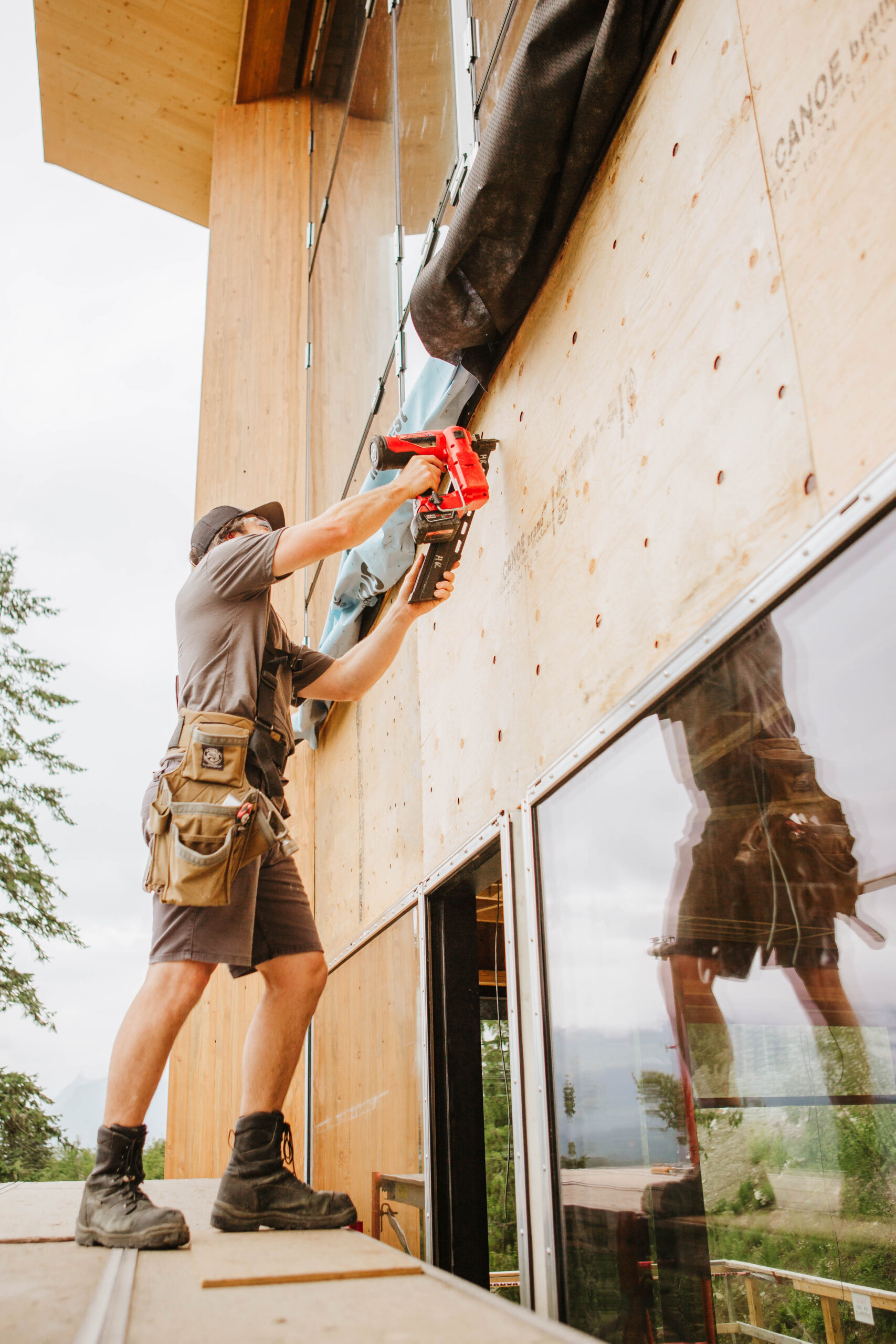
Renovation reduces material waste and embodied carbon associated with demolition.
Rebuilding allows:
Lifecycle sustainability should be evaluated over 30 to 50 years, not just at project start.
In mountain communities such as Golden, Revelstoke, and Invermere:
In these regions, working with an experienced Golden BC contractor or regional custom home builder enables a clearer evaluation of renovation feasibility versus a full property rebuild.
Site constraints determine whether reinforcement is feasible or reconstruction offers greater structural clarity.
Owners should evaluate based on:
Renovation is often appropriate when the structural shell is sound, and performance upgrades are moderate.
Rebuilding is often appropriate when structural limitations, code deficiencies, and long-term maintenance risk outweigh preservation value.
Factor | Renovation | Rebuild
Upfront Cost | Lower initial | Higher initial
Structural Risk | Hidden conditions | Clear engineered systems
Energy Performance | Limited upgrades | Full compliance
Timeline | Often shorter | Longer
Maintenance Risk | Variable | Predictable
Renovation preserves the structure and may reduce initial costs, but it introduces uncertainty and design limitations. Rebuilding increases upfront capital costs but delivers structural clarity, improved energy performance, and predictable lifecycle maintenance costs.
In British Columbia’s mountain regions, climate loads, access constraints, and evolving code standards often narrow the cost gap between choosing to renovate or rebuild. A disciplined, structural, and financial review is required before committing to either option.
When a rebuild is selected, early collaboration between design and construction teams, such as through a design-build approach, can improve schedule predictability and budget transparency.
The decision to renovate or rebuild should be based on structural feasibility, lifecycle cost exposure, and long-term maintenance performance rather than initial capital alone.
Is it cheaper to renovate or rebuild in British Columbia?
It depends on structural condition, engineering requirements, and code compliance gaps.
How do I know if my foundation is worth saving?
A structural assessment by a qualified engineer or construction manager determines feasibility.
Do I need a new building permit to rebuild?
Yes. A full rebuild requires a complete permit review under current building codes.