
Just-in-time construction, often called JIT delivery, aligns material arrivals with the actual needs of a project site. Instead of storing large volumes of inventory on-site for extended periods, contractors in Canada coordinate scheduled deliveries to support upcoming tasks. The method reduces on-site clutter, limits the exposure of materials to weather or damage, and supports predictable workflow sequencing. In Canada, where construction conditions vary significantly across regions, the timing of material deliveries is important to project performance. JIT supports lean construction by limiting unnecessary storage and ensuring that materials enter the site only when needed.
As construction methods evolve, Just-In-Time delivery is increasingly supported by digital coordination tools used by construction companies in Golden BC that allow teams to plan, visualize, and sequence work before materials ever arrive on site.
Construction, renovation, and demolition activities account for a significant share of national waste. The Canadian Council of Ministers of the Environment (CCME) guide stated that national waste generation reached 36.5 million tonnes, suggesting that construction, renovation, and demolition produced approximately 4.4 million tonnes. Excess inventory contributes to this volume when materials deteriorate, sustain damage, or become obsolete while stored on active sites. JIT reduces this exposure by controlling the timing, quantity, and handling of materials.
Early in the planning stages, owners and contractors evaluate site conditions, access constraints, storage capacity, and sequencing requirements. These factors influence whether a JIT system will strengthen workflow and support effective risk management and risk clarity. On many Canadian sites, especially those with restricted staging areas or sensitive environments, JIT provides a structured method for managing material flow.
Early Integration of HR Pacific’s JIT Approach
HR Pacific incorporates JIT practices into procurement planning and site coordination on many of its projects as a custom home builder in Golden BC and regional construction firm. Delivery timing is synchronized with installation readiness, reducing the need for long-term storage. Project managers maintain updated delivery schedules and confirm that arriving materials align with the active work of specific trades. This supports clear movement paths, lowers the risk of accidental damage, and prevents inventory buildup on sites with limited access.
This high-level integration forms the basis for HR Pacific’s construction management approach to sequencing and material control throughout the construction process.
Increasingly, this coordination is informed by 3D Building Information Modeling (BIM) workflows that allow sequencing decisions to be tested digitally before they are implemented in the field, particularly for projects using prefabricated structural systems common in remote construction in British Columbia.
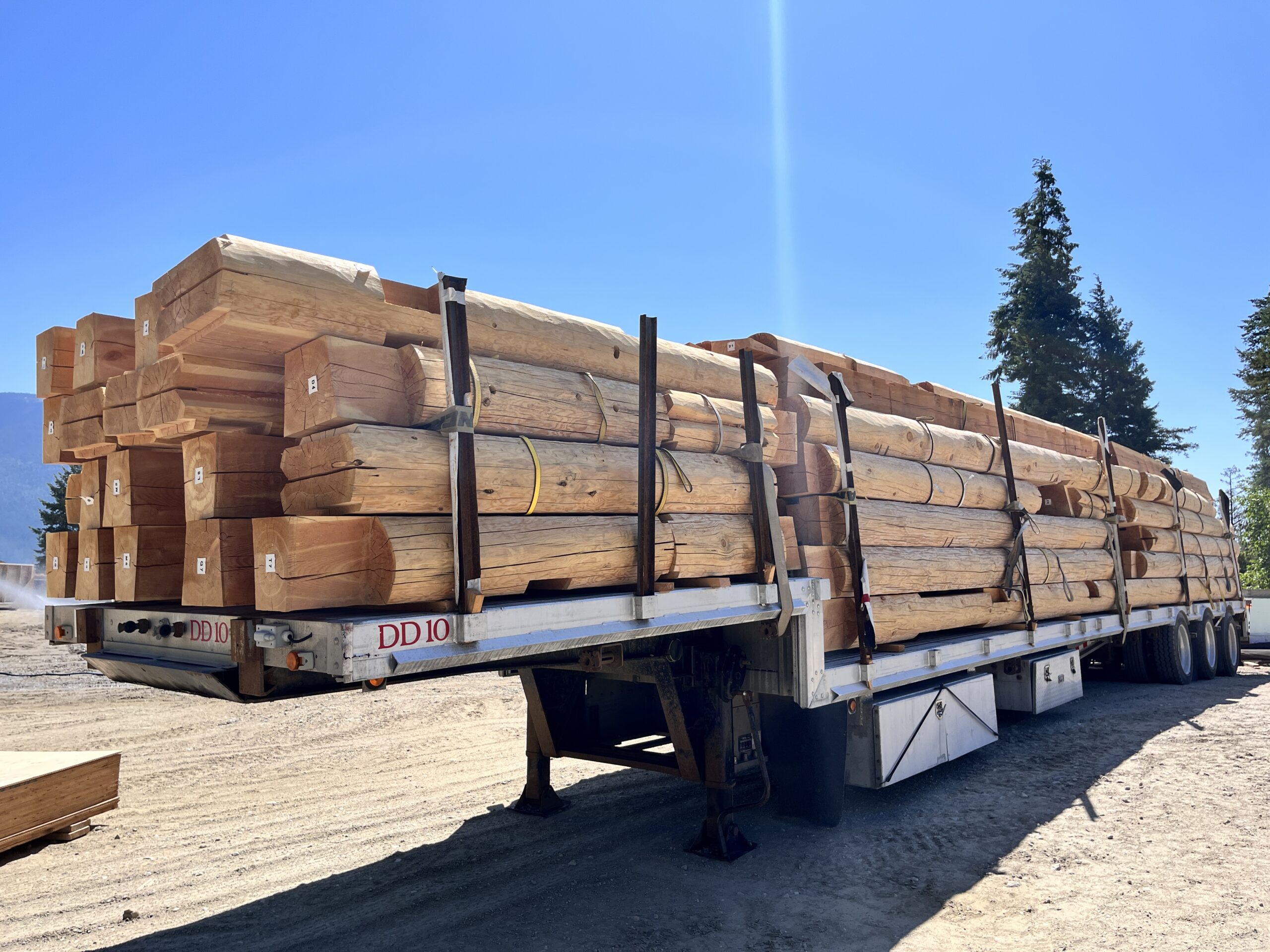
With JIT, the build site does not have to look like a bone yard.
Material management influences safety, efficiency, and scheduling. When deliveries occur too early or too late, project teams experience delays, increased labor time, or unnecessary handling. JIT structures the process so that materials remain off-site until they are needed.
Excess materials reduce maneuvering space for workers and equipment. Congested paths make it harder to coordinate trades and move tools. Interior renovations, steep mountain lots, and tight urban locations are particularly sensitive to storage limits. JIT minimizes clutter and keeps the site organized throughout construction.
This is especially important for projects delivered by custom home builders in Revelstoke, where mass timber, timber-frame, or log-home systems require large structural components that must be installed in a precise sequence.
Materials stored for long periods experience a greater risk. Weather exposure deteriorates products such as lumber, drywall, flooring, and insulation. High-value components are vulnerable to theft when a secure storage environment is not available. JIT reduces storage duration and lowers the chance of inventory loss.
Prefabricated timber assemblies used by home builders in Invermere benefit from reduced exposure, as they are often delivered finished or near-finished.
Delayed deliveries can halt scheduled tasks and create idle labor time. Early deliveries can overwhelm limited space and lead to costly off-site storage needs. JIT provides a structured way to balance these conditions. When paired with updated schedules and coordinated subcontractor planning, JIT supports a smoother flow of work.
When sequencing is developed using coordinated 3D BIM models, teams can virtually test delivery timing and installation order before work begins, which is particularly valuable for mass timber and timber frame erection.
Custom home construction and renovation often involve decisions that evolve as the project progresses. When materials are ordered far in advance and delivered early, modifications can result in waste or necessitate reordering. JIT supports flexibility because schedule adjustments can occur before materials arrive.
Material costs are distributed across the timeline rather than concentrated at the start of the build. This creates a predictable financial path for owners and improves the contractor’s ability to manage phased procurement.
Material timing affects task sequencing, subcontractor coordination, and site logistics. Late deliveries can prevent installation and reduce productivity. Early deliveries create congestion and introduce handling risks. Both conditions increase cost and complicate the site environment.
Many Canadian construction sites present additional challenges. Remote locations may limit storage space. Winter conditions affect material protection requirements. Mountain properties often require precise staging due to narrow access roads. Urban projects handled by general contractors in Vancouver often have limited laydown zones or shared access with neighboring properties. JIT provides a method for managing these conditions by reducing unnecessary material presence on site.
These constraints are especially relevant for log homes, timber frame homes, and mass timber construction, where structural elements are delivered in large sections and require clear installation paths.
These same access, sequencing, and coordination considerations are explored further in HR Pacific’s approach to remote construction and design-build delivery, where early planning and integrated teams play a critical role in managing complexity.
The success of JIT depends on consistent and predictable performance from suppliers and delivery partners.
Evaluate experience.
Delivery partners should demonstrate experience with construction timing and provide references from contractors who rely on punctuality, including experience delivering prefabricated timber and structural assemblies.
Confirm systems and tracking.
Reliable partners use digital scheduling tools, real-time tracking, and automated notifications that support accurate planning.
Suppliers that can coordinate directly with BIM-informed schedules are better positioned to support Just-In-Time delivery of mass timber, log, and timber frame components.
Assess communication.
JIT relies on timely responses. Delivery partners must coordinate with project managers and site supervisors to adjust arrival times as required.
Discuss contingency planning.
Strong partners can outline procedures for delays due to weather, transportation issues, or inventory shortages. This reduces uncertainty during construction.
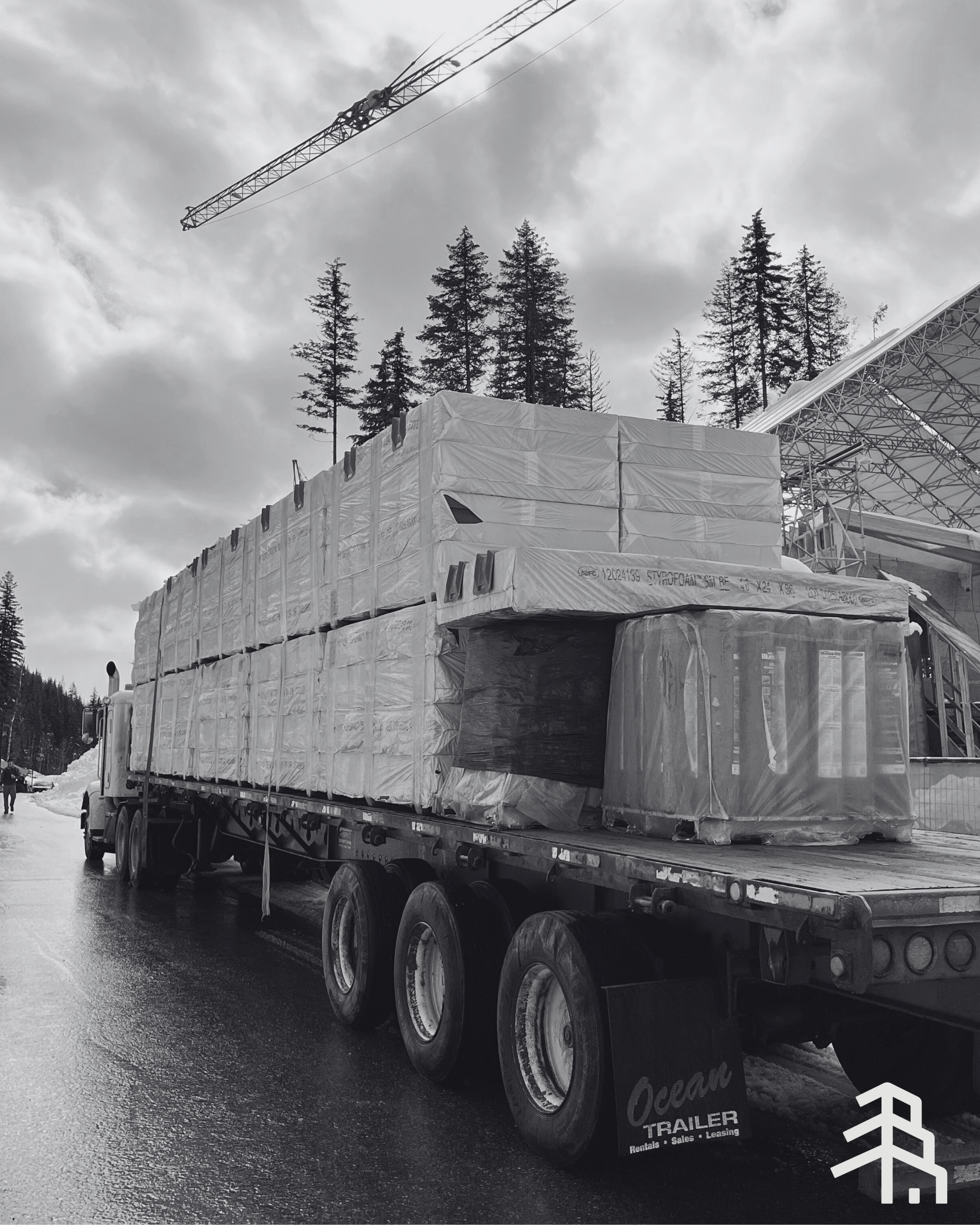
Building supplies awaiting use – readily accessible using JIT
Contractors can adopt JIT through a phased approach that minimizes disruption to existing workflows.
Start with specific scopes.
JIT can be applied first to mass timber structures, timber frame packages, log home components, cabinetry, glazing, mechanical equipment, or finish materials. These scopes are often fabricated off-site, where BIM-driven coordination supports dimensional accuracy, connection detailing, and delivery timing.
Integrate buffer time during early phases.
Modest scheduling allowances help teams adjust to the system. As coordination improves, buffer time can be reduced.
Improve communication.
Project teams review the schedule regularly to ensure delivery timing aligns with the planned installation schedule. Clear communication supports alignment between suppliers and trades.
Use partners with local warehousing.
Local distribution facilities allow suppliers to adapt delivery timing to evolving site conditions.
Project management systems allow construction companies to monitor schedules, track procurement progress, and forecast material needs. Digital logs, updated site reports, and coordinated schedules strengthen decision-making. When used correctly, digital tools help contractors align future material arrivals with actual field conditions.
The advent of Building Information Modeling (BIM) has fundamentally changed how this coordination occurs. By virtually building the project in 3D, teams can coordinate materials, assemblies, and sequencing before physical construction begins. This shift is widely used in custom home building in Golden BC to support increased visibility, clash detection, accuracy, and scheduling reliability, particularly for modular construction, mass timber systems, timber frame homes, and log home projects.
HR Pacific uses digital coordination tools, including 3D BIM workflows and Autodesk Construction Cloud (ACC Build), to monitor schedule performance, document job progress, and track delivery timing. Updated information allows site supervisors to maintain accurate material sequencing and prevent early arrival of items that require protection. These systems support communication between project managers, trades, and suppliers.
HR Pacific applies JIT through structured sequencing, controlled deliveries, and daily coordination. Material arrivals are matched to installation readiness, ensuring that deliveries support ongoing work rather than occupying storage space. Project managers update delivery schedules based on site conditions and confirm timing with the relevant trade. This reduces unnecessary handling and protects materials from exposure to the weather.
Site organization is supported through controlled inventory levels. HR Pacific limits the volume of materials stored on active sites to maintain clear circulation paths. This reduces the risk of tripping hazards, accidental damage, and congestion. Sensitive materials such as millwork, glazing components, and mechanical equipment, as well as prefabricated timber elements, are scheduled to arrive only when installation crews are available to receive them.
Communication between teams is central to HR Pacific’s approach. Delivery coordination involves suppliers, trades, and internal staff to ensure consistency across the project. Daily check-ins support real-time adjustments. Updated delivery logs and digital procurement tracking maintain accuracy throughout the construction process.
Many HR Pacific projects take place on sites with restricted access or limited staging areas. Mountain resort properties, lakefront lots, and urban projects often lack capacity for long-term storage. JIT supports these conditions by preventing inventory buildup and maintaining orderly site environments.
When combined with BIM-enabled coordination and off-site fabrication of mass timber, timber frame, and log home systems, and implemented consistently, HR Pacific’s Just-In-Time delivery approach becomes part of a broader shift toward more predictable and controlled construction execution that helps reduce waste and strengthens safety.
Just-in-time construction reduces on-site clutter, lowers material risk, and supports efficient sequencing. The method aligns material deliveries with active tasks and limits inventory levels across the project timeline. In Canada, where weather, logistics, and access restrictions influence construction, JIT provides owners and contractors with a structured approach that reduces waste and improves predictability.
As BIM, off-site construction, modular manufacturing, and prefabricated timber systems continue to advance, Just-In-Time delivery supports lean construction by translating digital coordination into real-world execution.