
Building homes in remote locations requires a different approach than standard residential construction. In Canada, remote projects are shaped by access limitations, weather conditions, labor availability, and material logistics. These factors influence cost, schedule, and construction methods from the earliest planning stages. Home construction in Canada already presents regulatory and climatic complexity. When a project is located in an isolated or limited-access area, those challenges increase.
This article explains the practical realities of remote home construction in Canada. It outlines how infrastructure planning, logistics, climate, workforce planning, and off-site construction affect outcomes. Drawing on HR Pacific’s experience in remote site construction management in mountain, coastal, and limited-access regions, the article provides homeowners with a clear framework for planning construction in isolated areas and reducing risk.
For homeowners, the difference between a smooth remote build and a stressful one is often determined well before construction begins.
Home construction in Canada varies widely by region. Climate, terrain, and infrastructure influence every project. When a home is built in a remote location, these variables become central to decision-making. Challenges of building a home in remote Canada often stem from access constraints, limited services, and exposure to severe weather.
Remote locations may include mountain properties, lakefront sites, coastal islands, or areas without year-round road access. These conditions affect delivery routes, construction sequencing, and workforce logistics. Planning must address not only how the home will be built, but also how people, materials, and equipment will reach the site safely and consistently. Understanding these constraints is critical, as they directly influence schedule reliability, cost certainty, and the overall construction experience.
HR Pacific has completed projects in regions where access, climate, and logistics require early coordination. The company’s planning framework for these projects is outlined in Our Process.
Site Access and Infrastructure Planning for Remote Builds
Infrastructure planning for remote builds begins with site access. Some sites are accessible only during certain seasons. Others rely on ferry schedules, logging roads, or steep mountain routes. Access planning considers vehicle size limits, turning radii, load restrictions, and emergency access requirements.
Remote site accessibility and logistics often present unique challenges, such as seasonal road access, water-only transportation, or limited staging areas. Equipment, tools, and materials must be planned well in advance. Adding more to these challenges, missed deliveries or damaged shipments can cause delays that are difficult to recover from. When access planning is underestimated, even minor disruptions can quickly compound, particularly when delivery windows are limited or weather-dependent.
HR Pacific evaluates access routes and delivery sequencing during early planning in close collaboration with consultants and suppliers. Examples of projects shaped by these constraints can be found in the Projects section.
Remote sites typically have limited laydown space for materials. Large deliveries arriving too early can overwhelm the site and increase handling risks. Weather exposure further increases the likelihood of damage to materials such as lumber, insulation, windows, and finishes.
HR Pacific manages this risk through controlled delivery scheduling, an approach developed specifically for sites with limited access and storage capacity. Materials are delivered close to installation dates, reducing the need for long-term storage. In some cases, off-site staging is used to support sequencing. This approach is especially important for building off-grid homes in Canada, where storage and services are limited.
Material coordination is part of effective remote site construction management and is closely tied to construction management practices described in Construction Management.
Labor Availability and Workforce Coordination
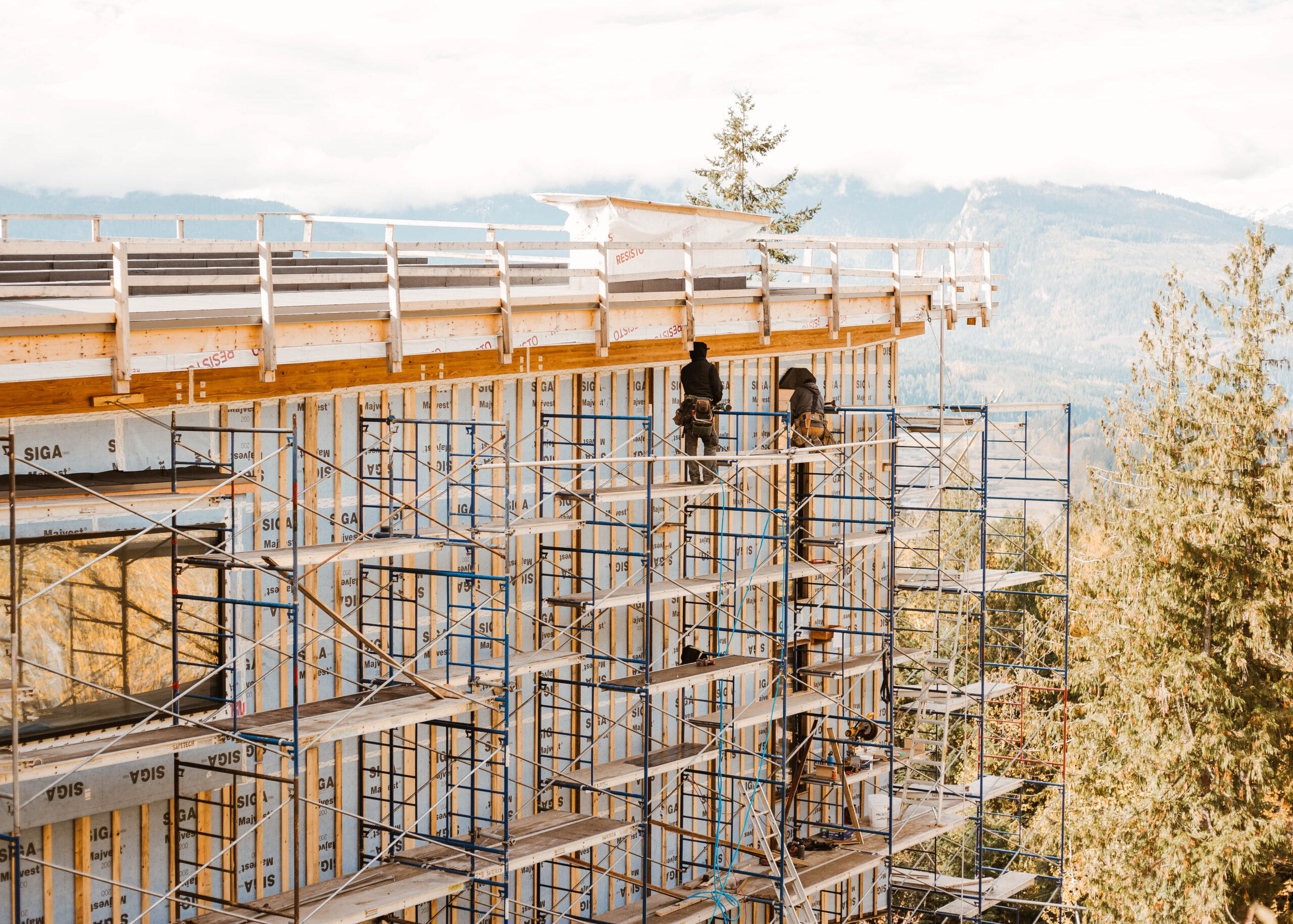
Qualified labor is often scarce in remote regions. This affects schedule reliability and quality control, particularly for custom homes that require experienced trades. Travel time, accommodations, and transportation must be planned.
HR Pacific has experienced in-house crews capable of performing a wide range of site work. This reduces reliance on unpredictable local labor markets and helps maintain consistent workmanship and schedule reliability across the project. External trades are scheduled carefully to align with access windows and site readiness.
Workforce planning is essential to managing the challenges of home construction in Canada’s remote regions.
Weather challenges in Canadian construction are amplified in remote locations. Heavy snowfall, freeze periods, high winds, and prolonged rain influence foundation choices, enclosure timing, and material protection strategies.
Seasonal planning helps identify when a site is accessible and when specific work can proceed safely. Winter access, snow management, and freeze protection are addressed early. Sensitive materials are delivered only when conditions allow for proper installation. In remote locations, weather-related delays are harder to absorb because access windows and trade availability are often fixed.
HR Pacific integrates climate considerations into planning using 3D modelling, Building Information Modeling (BIM), and Autodesk Construction Cloud (ACC Build), along with technical coordination tools and digital scheduling systems, outlined further in Advanced Technology.
Pre-construction planning is critical for remote projects. Site surveys, geotechnical investigations, access reviews, and delivery sequencing are completed before construction begins. Many decisions that could be adjusted on-site in rural or urban projects must be finalized early, especially in remote settings.
This planning phase aligns design intent with logistical constraints. It allows homeowners to understand how access, climate, and infrastructure planning for remote builds influence cost and schedule. Strong pre-construction planning helps manage risk once work begins.
HR Pacific’s approach to early coordination is detailed in Our Process.
Off-Site Construction and Fabrication Strategies
Off-site construction reduces the amount of work required in challenging field conditions. Components such as wall panels, roof assemblies, and mass timber elements can be fabricated in controlled environments and delivered ready for installation.
HR Pacific evaluates off-site opportunities during planning. These methods improve quality control, shorten on-site duration, and reduce exposure to weather. Transport dimensions and access routes are reviewed to ensure assemblies can be delivered safely.
Off-site strategies are particularly effective for building homes in remote locations with short construction seasons.
Where off-site fabrication reduces on-site work, just-in-time delivery helps manage what must still arrive at the site.
Remote sites often lack adequate laydown space. A smart solution employed by HR Pacific is Just-in-Time construction, which ensures material arrivals and installation readiness, thereby reducing storage needs and protecting materials from damage. With JIT, HR Pacific aligns delivery schedules with trades and suppliers to maintain controlled inventory levels. This approach supports sites that are cleaner and safer for construction work, even in remote settings.
Foundation systems in remote locations often differ from suburban construction. Transporting ready-mix concrete long distances can introduce timing and quality risks. Wet ground conditions or limited access may further complicate the use of traditional foundations.
Alternative systems such as screw piles, pedestals, or pre-engineered foundations are often considered. These systems align well with off-site construction and allow faster installation in difficult conditions. Structural coordination is completed early to ensure compatibility with the overall design.
Remote construction involves more variables than typical urban residential projects. Weather delays, access disruptions, and supply chain issues are common. Effective projects account for these risks through realistic scheduling and contingency planning.
HR Pacific builds schedule allowances where required and confirms supplier contingency plans. Clear communication channels allow adjustments to be made quickly when conditions change. In remote settings, contingency planning is less about margins and more about maintaining continuity when access or supplies are disrupted. Insurance, safety planning, and emergency protocols are reviewed during project setup.
Experience matters when building in isolated regions. Homeowners should review a builder’s prior work in similar environments. Architects and consultants familiar with remote construction logistics in Canada are better positioned to design within the constraints of access and climate.
Project owners should look beyond portfolio images and ask how teams managed access, weather delays, and logistics on comparable projects.
HR Pacific’s portfolio reflects experience with remote home construction across British Columbia. Reviewing completed work and discussing constraints early helps set realistic expectations. These projects can be explored in the Projects section.
Building homes in remote locations is achievable with the right planning and team. Homeowners benefit from understanding access limitations, weather challenges, and infrastructure planning requirements early in the process. Clear coordination reduces risk and improves outcomes.
With appropriate planning, remote home construction can be predictable and well-managed through proactive planning rather than reactive decision-making.
To discuss a potential remote build or learn more about how HR Pacific approaches home construction in Canada’s remote regions, reach out to us. We’re here to help.