
Building a vacation rental property requires a fundamental shift in decision-making compared to creating a private family retreat. A successful rental-friendly home must achieve a precise balance between durability, operational efficiency, and long-term value. In resort regions such as Golden, Revelstoke, and Invermere, usage is higher than for full-time residents, and guests expect a seamless, intuitive experience.
The goal of a “guest-proof” build is to implement systems and materials that reduce maintenance realities while protecting the owner’s investment. Here is how to build a vacation rental home that manages itself.
Before finalizing any vacation rental home design ideas, you must confirm that short-term rentals are permitted on your specific site. Zoning bylaws, parking requirements, and occupancy limitations vary significantly by municipality. Reviewing Canadian short-term rental regulations early prevents costly redesigns or operational restrictions after construction is complete.
Once regulations are cleared, define the property’s use. A property designed for large groups will have different mechanical and storage needs than one intended for couples. Addressing these questions early ensures the best layout for vacation rental homes, one that reduces friction for guests and supports efficient cleaning between stays.
Short-term rental property design prioritizes clarity. Guests should understand how to navigate the space immediately without instruction.
Effective layout strategies include:
Durability is central to building a vacation rental property. Material choices must reflect frequent turnover and the reality of limited on-site oversight. Favor hard surface flooring over wall-to-wall carpet. Select durable countertops with simple edge profiles. Fixtures and hardware should be rated for hospitality or commercial use to withstand constant handling.
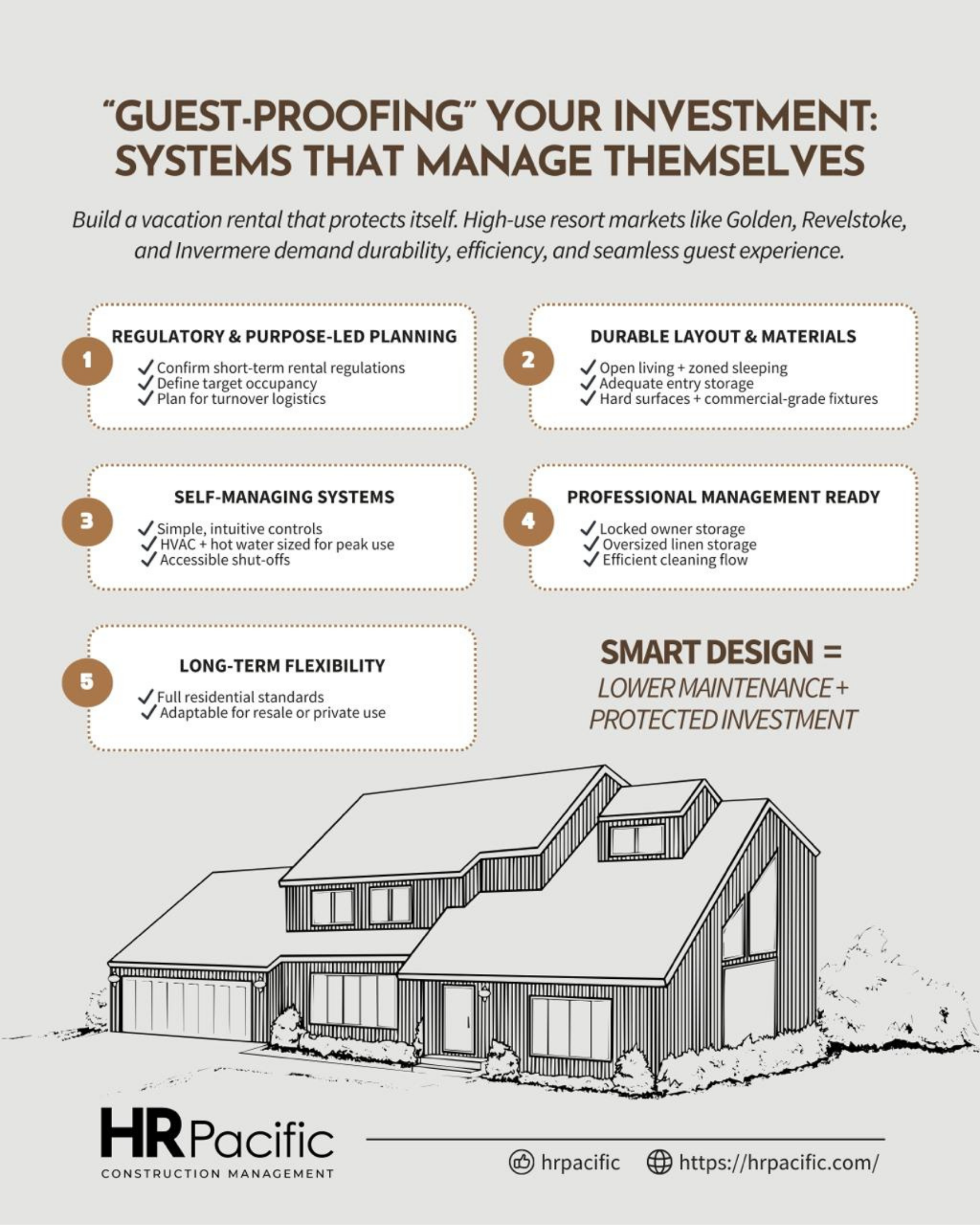
Mechanical and electrical systems should prioritize simplicity over complexity. Because vacation rentals often operate without on-site supervision, system failures are highly disruptive to the guest experience.
Important design tips for vacation rental homes include:
One common oversight is insufficient storage for the owner and maintenance crews. To make your home rental-friendly, you must plan for the logistics of turnover. This includes dedicated, locked owner storage and linen closets sized for rapid turnover requirements.
Finally, think about resale and future use. Design choices should support flexibility, such as sizing bedrooms for permanent occupancy and ensuring all systems meet full residential standards. This foresight ensures the property remains a viable asset whether it is used for short-term stays, long-term rentals, or as a private residence. Working with an experienced construction management team can help balance these upfront costs with long-term lifecycle performance.
Read more here or contact us to learn how we can help you protect your property.