Executive Summary
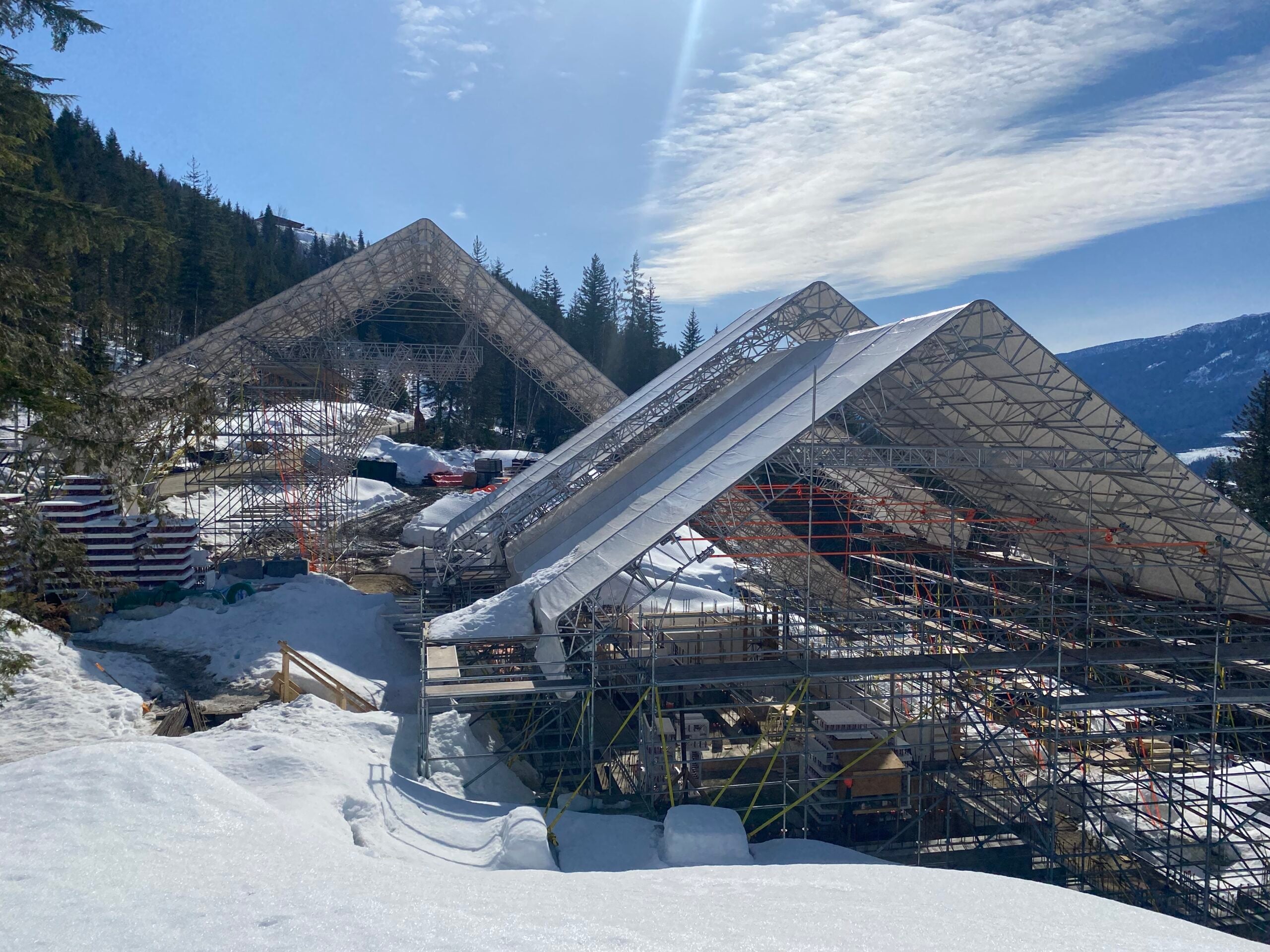
- Mountain construction in Canada presents unique challenges: steep terrain, short seasons, and extreme weather shape every project.
- Elevation construction challenges include blasting through rock, stabilizing slopes, and meeting stricter snow load requirements under the BC Building Code.
- Cold weather construction Rockies compresses schedules, tests materials, and makes freeze–thaw cycles a structural risk.
- Local case studies from Revelstoke, Golden, and Invermere illustrate how weather and geography redefine construction timelines and methods.
- Success in the Rockies is measured not only by timelines and budgets, but also by delivering resilient, bespoke homes that withstand the mountain climate.
Introduction
The Canadian Rockies are an iconic backdrop: towering peaks, alpine forests, and mountain lakes make this region one of the most desirable locations for second homes, resort properties, and custom builds. Yet for all its beauty, this landscape is one of the most demanding environments for construction.
Unlike suburban projects in Calgary or Vancouver, building in the Rockies requires an entirely different playbook. Elevation affects temperature, snow accumulation, soil conditions, and even the ability to deliver materials to the site. Weather dictates schedules, with construction compressed into narrow summer windows. Building codes reflect these realities, requiring stronger roofs, deeper foundations, and specialized detailing to resist snow and water.
In towns like Revelstoke, Golden, and Invermere, these realities are felt daily. Contractors face logistical hurdles from mountain roads, snowstorms that close passes, and unpredictable freeze-thaw cycles that can crack foundations or halt pours. At the same time, homeowners seek homes that are both unique to their sites and resilient enough to last for generations.
This blog explores the elevation construction challenges and weather and elevation challenges for mountain homes in British Columbia, combining professional insights, regional examples, and Canadian statistics. The goal is to educate homeowners, designers, and developers about what it truly takes to succeed when building at altitude in the Rockies.
What Makes Mountain Construction Different?
- Terrain drives the design.
Mountain lots are rarely flat. Many are cut into hillsides or sit on ridges with steep slopes. Excavating for a foundation often means encountering rock layers or unstable soils. Unlike suburban subdivisions, where earthmoving is predictable, here every lot demands unique engineering. Retaining walls, stepped foundations, and specialized drainage systems are standard features. For example, in Revelstoke, where slopes average 25–30% in residential areas, stepped foundations prevent homes from sliding downhill during spring melt.
- Codes scale with climate.
The BC Building Code sets snow load requirements by location. In Vancouver, the ground snow load is about 1.8 kPa. In Revelstoke, it’s over 7.2kPa, more than triple. This difference means roof structures require oversized trusses, deeper rafters, and detailing to prevent snowdrifts. In Golden, with an elevation near 800 metres, roof designs often feature 10:12 or steeper pitches to shed wet snow. These aren’t stylistic choices, but safety requirements. Snow load structural planning for Rockies custom homes is one of the defining elements of design.
- Weather compresses building seasons.
Suburban construction may proceed almost year-round with minimal interruption. In the Rockies, exterior work is squeezed into four or five months between thaw and early snowfall. Crews may have until October to finish foundations, framing, and roofing before snow arrives. In Invermere, sudden storms in September can halt projects for weeks. This compressed schedule forces contractors to carefully sequence tasks: excavation and concrete in spring, framing and roofing in summer, enclosure and interiors in fall.
- Every home is bespoke.
Off-the-shelf solutions fail in the mountains. Site orientation determines sunlight, wind exposure, and snow shedding patterns. Materials must be chosen for durability. Cedar shakes may not survive prolonged snow loads, while metal roofing can shed snow too quickly, endangering gutters, decks, or entrances without proper snow retention. The combination of site-specific challenges makes mountain construction in Canada less about repetition and more about custom problem-solving.
Elevation Construction Challenges
- Rock and soil conditions.
Excavation at elevation often encounters bedrock at shallow depths. While this provides excellent bearing strength, it complicates foundations. Blasting adds cost and time, and in some cases, foundations must be pinned to rock with rebar dowels and grout. A contractor in Golden recently reported needing controlled blasting on a residential site, adding six weeks and significant cost before concrete could be poured. These elevation construction challenges are common in towns built along ancient river valleys where bedrock sits close to the surface.
- Slope stability and drainage.
Mountains funnel water downhill, concentrating runoff. In Revelstoke, snowmelt can double river levels in spring, raising the groundwater table and putting hydrostatic pressure on basement walls. Without engineered drainage, this leads to cracks, leaks, and mold. Builders respond with perimeter drains, sump systems, and geotextile filters. Retaining walls require tie-backs or stepped construction to resist sliding. These measures aren’t extras. They’re essentials for hillside safety.
- Access and logistics.
Mountain sites pose delivery challenges. Narrow, winding roads limit truck access, especially for long trusses or concrete trucks. In some cases, helicopters are used to fly in materials for remote builds. Weather compounds these issues: snow can close Rogers Pass, delaying delivery of critical materials to Golden or Revelstoke for days. Labor and access challenges for high altitude builds in Canada also increase costs, as fewer trades are willing to work in remote or harsh conditions.
- Codes and compliance.
Beyond snow loads, elevation affects frost depth. In Vancouver, frost depth is about 450 mm; in Revelstoke, it’s closer to 1,000mm-1,200 mm. Foundations must be deeper to avoid frost heave. Similarly, insulation requirements increase as average temperatures drop with altitude. These aren’t optional. Building inspectors enforce compliance, and non-conforming work risks failure. This is how elevation affects building codes in BC mountain towns becomes visible to homeowners expecting “normal” suburban standards.
Weather Risks in Mountain Homes
- Freeze–thaw cycles.
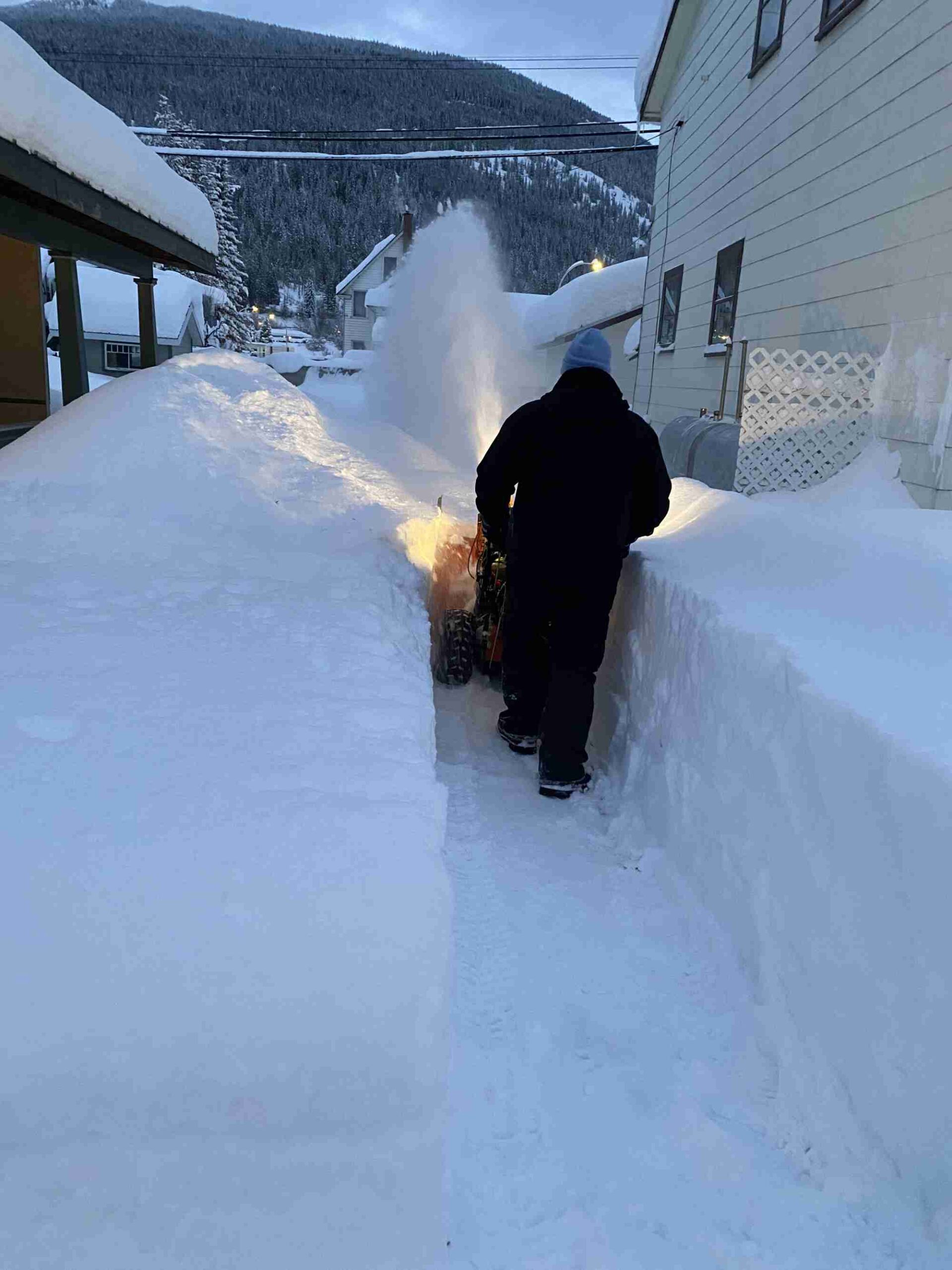
At elevation, daily temperature swings create multiple freeze–thaw events. Water that infiltrates cracks expands as it freezes, widening them. Over a winter, this cycle can cause significant damage. Driveways heave, retaining walls shift, and even concrete foundations can crack. Dealing with freeze-thaw cycles in mountain builds requires air-entrained concrete, careful curing, and effective drainage. Without these measures, structural damage appears within a few years instead of decades.
- Snow load and storms.
Snow in the Rockies is not light powder. It is dense, wet, and heavy. In Revelstoke, where snowfall averages 460 cm annually, snow weight on roofs can exceed 200 kilograms per square metre. Snow load structural planning for Rockies custom homes ensures structures survive these conditions. Roof pitches, snow retention systems, and reinforced trusses are standard. Winter storms also stop work entirely, stranding crews until conditions improve. Winter storms construction challenges mountain homes are an expected part of project planning.
- Compressed building seasons.
In Invermere, concrete pours are only feasible between May and September. Beyond that, ground frost compromises curing. Contractors must plan to complete major structural work before the freeze returns. Missing this window means delays until the spring thaw, or the need for heated concrete pours, which would affect the budget. These weather and elevation challenges for mountain homes in British Columbia make scheduling as important as design. Homeowners who underestimate timelines often face frustration when nature, not contracts, sets the pace.
Regional Examples
- Known as one of the snowiest towns in Canada, Revelstoke presents unique demands. Building in Revelstoke elevation weather considerations include avalanche risk zones mapped by the city, deep frost lines requiring robust basements, and snow loads over four times higher than in Vancouver. A typical custom build here might include basement walls reinforced to resist hydrostatic pressure, triple-pane glazing to handle temperature swings, and roofs engineered with oversized trusses to meet a design snow load exceeding 7.2 kPa.
- At nearly 800 metres elevation, Golden experiences colder winters and shorter summers than nearby valleys. Planning mountain home construction Golden BC weather impact means fitting excavation, framing, and roofing into a compressed June–September window. A typical Golden project might start in late May, with crews racing to pour foundations. By early fall, trusses and roofing must be complete; otherwise, October snow can slow down, or even halt progress until spring.
- With more variable conditions, Invermere’s main challenge is unpredictability. Mountain weather delays for construction in Invermere BC include sudden thunderstorms that halt roofing, early frosts that stop concrete pours, and wildfires that affect air quality. In practice, this means every Invermere project includes contingency weeks baked into the schedule. For example, a home scheduled for a four-month build might plan six months on paper, knowing local weather can shift timelines by 25–30%.
The Professional Builder’s Role
- Setting expectations early.
Mountain construction brings complexities that aren’t always obvious at first glance.. Professional builders explain snow load requirements, drainage challenges, and scheduling constraints upfront. This avoids disappointment when timelines extend or designs shift to meet codes.
- Coordinating specialists.
Rocky Mountain projects require teams of specialists: designers, structural and geotechnical engineers, civil designers, and skilled trades. Builders coordinate these inputs, bringing them together into a coherent plan. This orchestration is critical when weather and elevation challenges for mountain homes in British Columbia leave no room for error.
- Managing logistics.
Builders plan deliveries around road closures, inspections around weather, and crews around compressed timelines. High-altitude contractor requirements for Rockies builds should go beyond construction. They have to anticipate logistical hurdles.
- Ensuring quality.
At elevation, quality is not optional. Concrete must cure properly despite temperature swings. Roofs must be airtight to prevent ice dams. Builders monitor every step, knowing that the first winter will test the structure more than any inspection.
Success in Rocky Mountain Projects
- Beyond time and money.
Success is not just finishing on budget. It’s completing a project where the homeowner feels safe, comfortable, and satisfied. At HR Pacific, we define success not only by the quality of the buildings we deliver, but by the enduring relationships we share with our clients long after the keys are handed over..
- Designs suited to their site.
Rooflines, slopes, and materials all adapt to location. Cold weather construction Rockies methods ensure homes endure harsh climates while still achieving architectural beauty.
- Sequencing around climate.
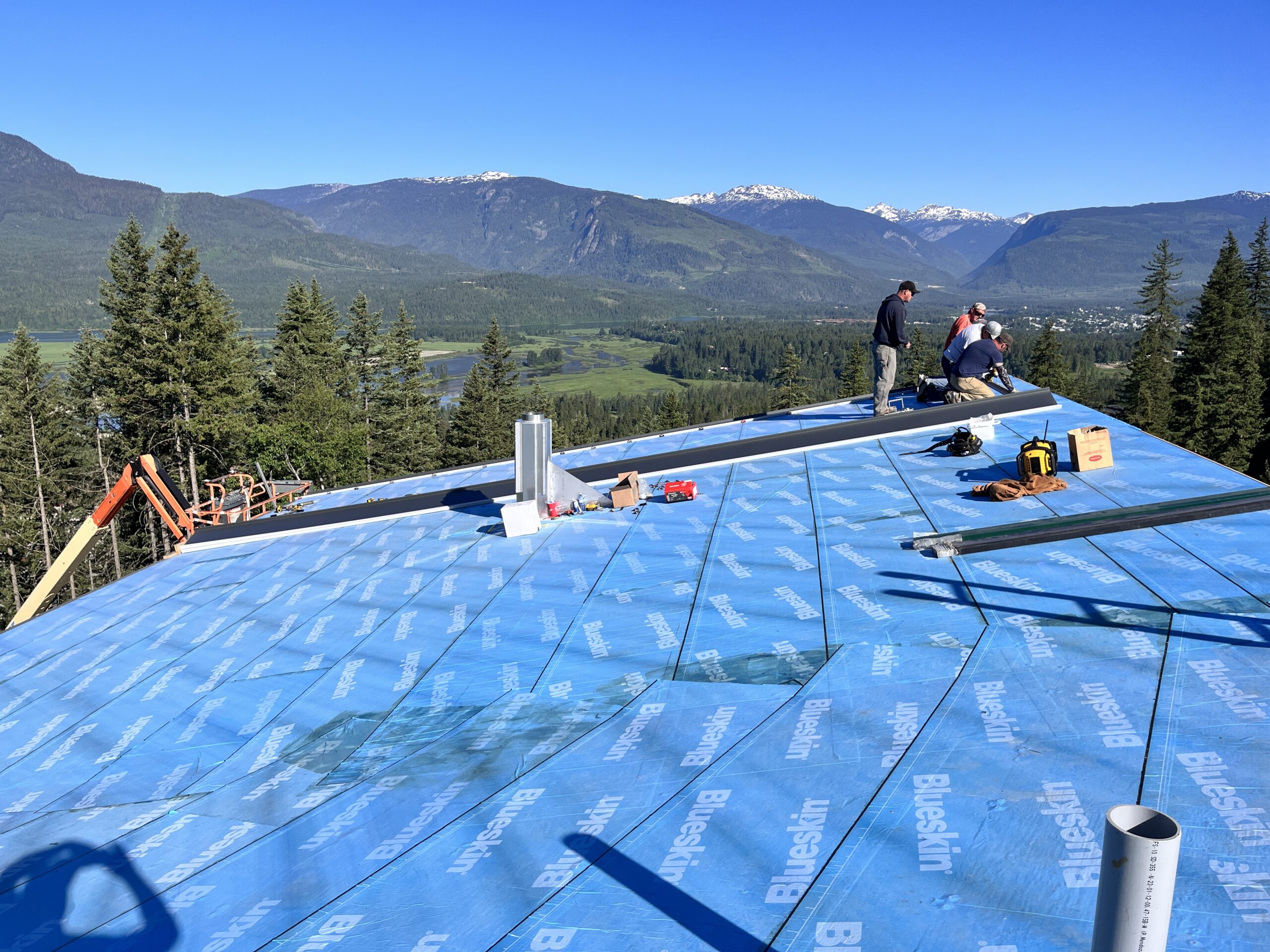
Projects succeed when foundations, structure, and roofing are completed before fall snow. Late-season work becomes interior finishing under cover, not a scramble against weather. This is the reward of planning for elevation effects on construction timeline Rockies.
Practical Playbook: Planning High-Altitude Construction
- Start with data.
Every project should begin with snow load values from the BC Building Code and climate normals from Environment Canada. This informs structural design, building envelope, and drainage requirements. It is the foundation of how to plan construction at high altitude Rockies BC.
- Sequence smartly.
Foundations, framing, and roofing are ideally completed in summer. Interior work follows in fall and winter. Builders emphasize “roof on by October” as a rule of thumb.
- Engineer for freeze–thaw.
Concrete must be air-entrained, cured under controlled conditions, and protected from saturation. Drainage systems should direct water away from structures to avoid frost heave.
- Detail for snow.
Properly sized trusses, ice-dam prevention, and snow-retention hardware are not optional. These details are central to snow load structural planning for Rockies custom homes.
- Plan for access.
Remote sites may require snow-clearing equipment, temporary power, or even helicopter lifts. Builders must anticipate these realities, not react to them.
Key Takeaways
- Elevation reshapes construction. From excavation to roof design, altitude dictates requirements in ways suburban homeowners rarely anticipate. Steeper slopes, frost depth, and heavier snow loads make specialized planning essential.
- Freeze–thaw cycles demand attention. At higher elevations, daily swings above and below freezing cause water in soil and concrete to expand and contract. Without preventative measures like air-entrained mixes and drainage systems, structural damage can appear within just a few winters.
- Snow is a structural reality. Revelstoke alone receives over 4.5 metres of snowfall each year. Roofs must be designed to withstand tonnes of weight, with trusses, slopes, and snow retention systems engineered to keep homes safe.
- Weather sets the schedule. Mountain towns face compressed building seasons that vary by weeks depending on climate shifts. Missing the summer window can delay projects until the next year, making flexible scheduling and buffer time non-negotiable.
- Professional builders are essential. In mountain construction Canada, only experienced contractors can anticipate logistical hurdles, align specialists, and adapt to weather changes, thus turning risks into resilient, long-lasting homes.
FAQ
Q1: When is the best time to start building in the Rockies?
Late spring through early summer is ideal. This allows excavation and foundations to be completed after thaw but before heavy fall snow. In many BC mountain towns, foundations poured after September risk frost damage. Missing the window often pushes projects into the following year.
Q2: Why are roofs in the Rockies so steep?
Steep roofs are engineered to shed heavy, wet snow safely. In Revelstoke, the design snow load exceeds 7.2 kPa, compared to just 1.8 kPa in Vancouver. Without steep slopes and reinforced trusses, snow accumulation can become a safety hazard, stressing structures beyond capacity.
Q3: Can construction continue in winter?
interior work can proceed once a home is enclosed, but exterior work slows dramatically. Frozen ground, storms, and reduced daylight limit productivity. While certain trades can continue under heated enclosures, most heavy construction is scheduled for the warmer months to minimize cost and risk.
Q4: How does elevation affect a home’s energy use?
Colder air at altitude increases heating demand by up to 30% compared to valley floors. Homes in Revelstoke and Golden require enhanced insulation, air-sealing, and triple-pane windows to maintain comfort. Without these measures, energy costs rise sharply and indoor comfort suffers.
Q5: What’s the biggest risk of building at altitude?
Weather delays are the most consistent challenge. Storms can shut down highways, freeze–thaw cycles can halt pours, and unexpected early snow can stall framing. Contractors must build contingencies into every schedule, sometimes adding 20–30% buffer time for climate events.
Q6: Do building codes change in mountain towns?
Yes. Snow load, frost depth, and insulation requirements are stricter. For example, frost depth in Revelstoke is over double that of Vancouver, requiring deeper foundations. These local codes are based on Environment Canada data and ensure homes are structurally sound under mountain conditions.
Q7: Why do I need a specialized high-altitude builder?
Mountain projects involve unique risks: steep terrain, limited access, freeze–thaw cycles, and heavy snow loads. Builders without experience often underestimate these challenges, leading to delays and costly mistakes. Specialized builders know how to align teams, sequence schedules, and build homes that endure in mountain climates.
Conclusion
Building in the Rockies is as rewarding as it is demanding. Remote locations, elevation, and weather create challenges rarely encountered in suburban projects: excavation through rock, steep slopes, snow loads measured in tonnes, freeze–thaw cycles that crack concrete, and schedules compressed by short summers.
Yet these challenges are predictable and with planning, expertise, and foresight, they can be managed. Homeowners who respect the climate and hire experienced builders turn obstacles into opportunities. The result: homes that stand not only as retreats in a stunning landscape but as testaments to resilience and craftsmanship.
For HR Pacific, success in the Rockies means delivering more than houses. It means building trust, creating lasting relationships, and leaving behind structures that endure snow, storms, and time. That is the reality, and the reward, of building at elevation in the Canadian Rockies.